
Blog
First-party data: why your online shop is your best advertising asset
The shift from guessing to knowingFor years, online advertising ran on assumptions. You bought an audience based on age, postcode or declared interest...
The shift from guessing to knowing
For years, online advertising ran on assumptions. You bought an audience based on age, postcode or declared interests, hoped for the best and then tried to work out afterwards whether anything had actually worked. That model is losing ground fast. The most valuable currency in digital marketing today is not reach or creativity in isolation, but first-party data: the information a business collects directly from its own customers, with their consent.
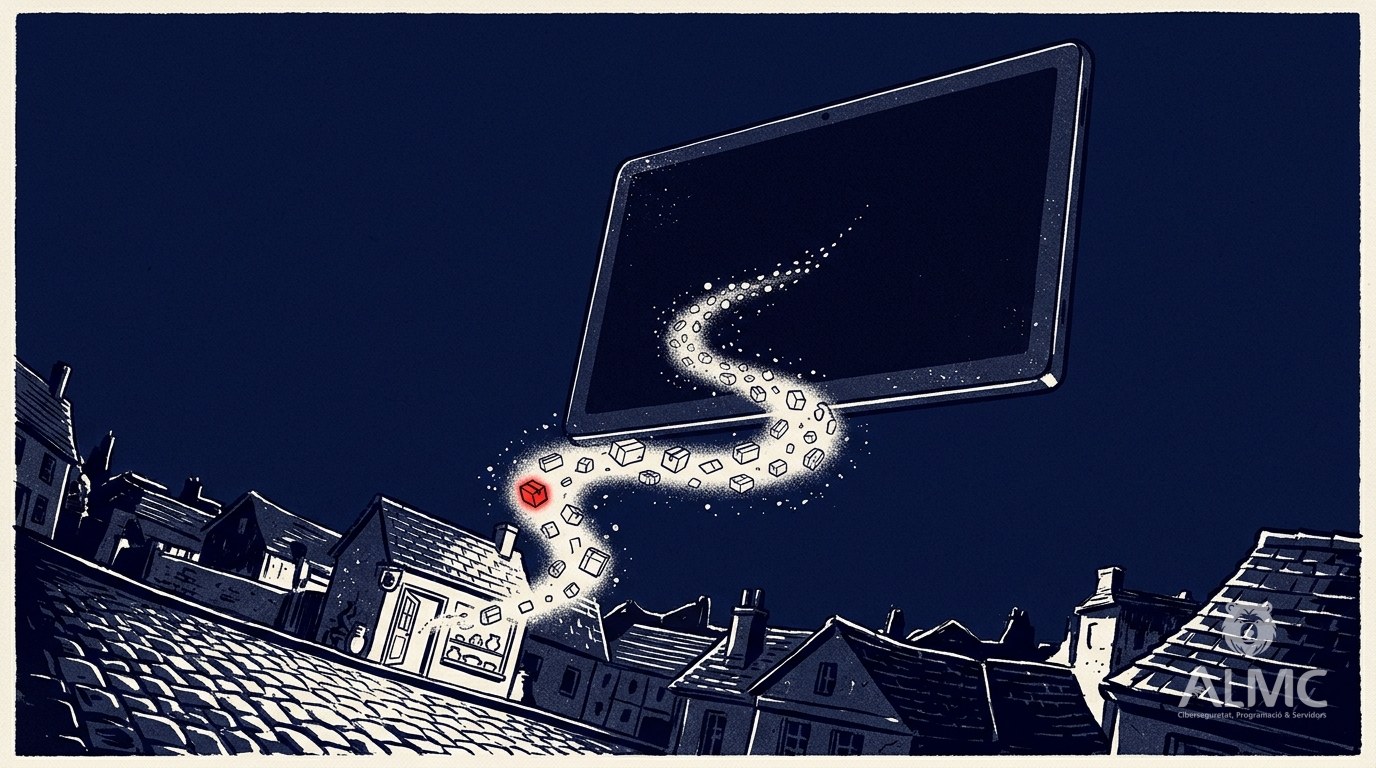
Large retailers were the first to prove the point, plugging their purchase histories into connected TV and streaming campaigns so advertisers could target people by what they actually buy rather than what they claim to like. The logic is straightforward and it applies far beyond the giants: whoever owns the transaction owns the signal. For a shop in Lleida, Girona or Tarragona, that signal lives in one place — the online store.
Your ecommerce platform is a data engine, not a catalogue
Most merchants still think of their shop as a digital shop window. In practice, a well-structured tienda online built on PrestaShop or WooCommerce is a continuous generator of behavioural information: which products are viewed together, where baskets are abandoned, which customers return within thirty days, which discount codes cannibalise margin. None of this requires guesswork, and all of it can be captured lawfully under GDPR if the setup is correct from day one.
The difference between a shop that merely sells and one that learns is usually technical rather than commercial:
- Clean product and category taxonomy, so every click can be attributed to a meaningful segment.
- Consent-aware tracking, with analytics and marketing pixels gated behind a compliant consent management setup.
- Order and customer data modelled properly, so segments can be exported to email, CRM or advertising platforms without manual spreadsheets.
- Conversion tracking that survives cookie restrictions, using server-side events and platform-native integrations.
When these foundations are missing, the data exists but cannot be used. When they are in place, the shop becomes the source of truth for every campaign you run.
What retail media teaches smaller merchants
The big retail networks have shown that purchase-based audiences command a premium because they correlate with intent. That premium is not available to everyone, and it is worth being honest about the trade-offs. Audiences built on transaction data cost more than broad demographic targeting, and the extra spend is only justified when the objective is incremental sales rather than simple reach. If your goal is awareness, cheaper inventory will usually do the job.
There is also a structural lesson: every intermediary added between your data and your campaign adds commission and loses fidelity. That is precisely why owning the shop matters. A merchant who controls their own ecommerce stack can build segments directly from their order history and activate them without renting someone else's audience.
A realistic roadmap for Spanish merchants
You do not need a data warehouse to start. A pragmatic sequence works well for most small and mid-sized businesses in Catalonia:
- Audit what you already collect. Most PrestaShop and WooCommerce installations hold far more usable data than their owners realise.
- Fix consent and documentation first. Under GDPR, lawful basis and records of processing are not optional, and retrofitting them is far more expensive than building them in.
- Define two or three commercial questions you want the data to answer, such as which categories drive repeat purchase or which acquisition channel produces the highest lifetime value in euros.
- Connect the shop to your marketing tools so segments update automatically rather than through monthly exports.
- Measure incrementality, not just attribution. Compare exposed and non-exposed groups before scaling spend on any purchase-based audience.
Conversion optimisation is where the data pays off
Collecting data has no value unless it changes decisions. This is where conversion optimisation earns its place: checkout friction, product page clarity, delivery cost transparency and mobile performance all influence whether a visitor becomes a customer whose data you can then use responsibly. A shop that converts at a healthy rate generates more first-party data per euro of traffic, which in turn makes every subsequent campaign more efficient. It is a compounding loop, and it starts with the platform.
This is the approach we take at ALMC.es: building PrestaShop and WooCommerce stores to measure, not just to display, with the full stack — hosting, analytics, consent, integrations and ongoing optimisation — designed so that the shop feeds the marketing rather than the other way round. Whether you sell from Barcelona or from a small town in the Segrià, the principle holds: the businesses that will advertise profitably over the next few years are the ones that built their own data asset first.
Related
- WooCommerce vs PrestaShop: Which Ecommerce Platform Wins in 2025?
- CRO for Ecommerce: Turning WooCommerce and PrestaShop Templates into Sales Engines
- Agentic Commerce: How AI Agents Are Rewriting the Rules of Online Shopping
- Desarrollo web
Put these ideas into practice
Talk to ALMC about a solution for your business. Explore your options or contact our team.