
AI Copyright Lawsuits: What EU Online Shops Must Know
AI Copyright Lawsuits: What EU Online Shops Must Know
Why a US copyright case matters to a shop in LleidaWhen a major publishing group files a multi-million-dollar claim against an AI developer, it is eas...
Why a US copyright case matters to a shop in Lleida
When a major publishing group files a multi-million-dollar claim against an AI developer, it is easy to file it under "news that does not concern my business". But if you run an online shop in Catalonia — whether you sell locally from Lleida or ship across the EU — the underlying question is one you should be asking about your own website: who owns the text, images and data that feed the tools you use every day?
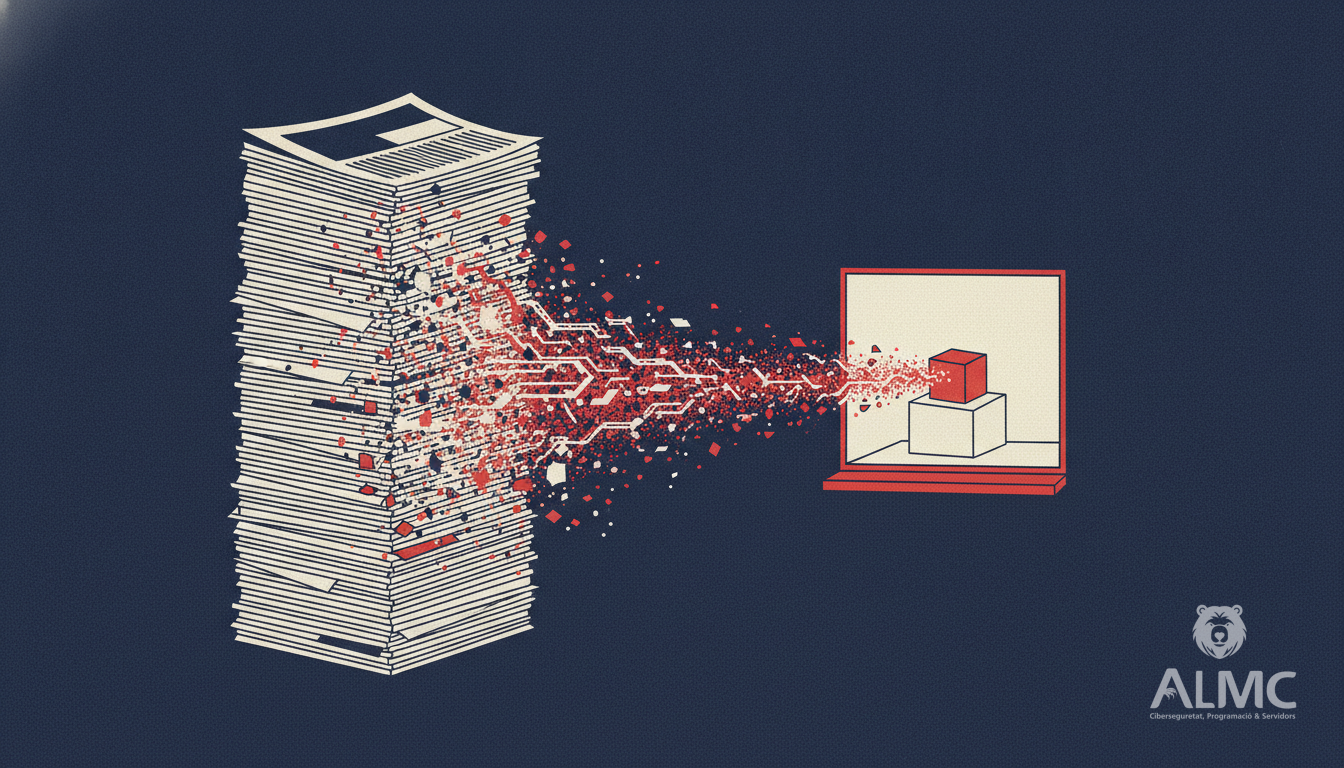
The dispute centres on whether large language models were trained on hundreds of thousands of news articles without permission, and whether the resulting chatbots can reproduce or paraphrase that journalism in a way that diverts readers and revenue away from the original publishers. The outcome is still pending, but the arguments being made in court are already shaping how businesses think about content, attribution and automation.
What the publishers are actually arguing
Strip away the legal language and the claim rests on three pillars:
- Unauthorised training data. The plaintiffs allege that datasets used to build early and later versions of a well-known AI model contained large volumes of their articles, including entries tied to specific news domains.
- Substitution of the original source. If a chatbot can summarise an article in response to a user prompt, the user may never visit the publisher's site — which hits advertising and subscription revenue.
- Removal of rights information. The complaint also raises the issue of copyright management information being stripped from protected works, which the publishers say strengthens their case.
None of this has been proven. It is a set of allegations that a court will have to weigh. But the pattern is familiar: content owners are pushing back against automated systems that ingest their work and repurpose it at scale.
The ecommerce angle nobody is talking about
Now translate that logic to your own shop. Many ecommerce teams in Spain have started using AI tools to draft product descriptions, translate listings into multiple languages, generate category pages or produce blog content for SEO. That is a legitimate and often sensible use of technology — but it comes with questions that a court case like this one forces you to confront.
Where did the training data come from? If you ask an AI assistant to write a description for a leather bag, and its output closely echoes a competitor's product page, you may be publishing text you do not own. If you use AI-generated images that resemble a photographer's work, you may be exposing yourself to a claim. And if you scrape reviews or articles to feed a recommendation engine, you are on even thinner ice.
Under EU and Spanish law, including the GDPR and the consolidated text of the Copyright Act, the burden of ensuring you have the right to use content falls on you as the publisher of your website. "The AI did it" is not a defence.
Practical steps for a compliant, high-converting store
This is not about avoiding AI. It is about using it with your eyes open. A well-built online store — whether on PrestaShop or WooCommerce — gives you the structure to do this properly:
- Keep a content provenance log. Note which product descriptions, images and blog posts were AI-assisted, and which model or tool was used. If a claim ever arises, you can show your process.
- Human-review every AI output. A quick edit pass catches paraphrased competitor copy, factual errors and tone that does not match your brand. It also improves conversion: generic AI text converts poorly.
- Use licensed or original imagery. Do not let an AI generate visuals that mimic a known photographer's style or a brand's packaging. Commission or license where it matters.
- Respect opt-outs and licences. If you use third-party datasets or APIs, check their terms. Some providers now offer indemnities; most do not.
- Be transparent with customers. A short note in your legal pages about how you use AI for content and personalisation builds trust and aligns with EU transparency expectations.
What this means for your ecommerce stack
A modern ecommerce platform is not just a checkout. It is a content management system, a marketing engine and a data hub. That is why the choice of platform matters when legal questions about content arise. A custom PrestaShop or WooCommerce build lets you control exactly what is published, where it comes from and how it is attributed. You can integrate AI tools as assistants rather than as unchecked publishers, and you can log changes at the database level.
Conversion optimisation and legal compliance are not opposites. Clean, original product content ranks better, builds more trust and reduces the risk of takedown requests or claims. Shops that treat content as an asset — with clear ownership and a documented process — tend to outperform those that treat it as filler.
The bigger picture for Catalan and Spanish retailers
Spain's ecommerce market is competitive, and AI is rapidly becoming a standard part of the toolkit for product discovery, customer service and marketing. The lawsuits unfolding in the US are a reminder that the rules are still being written. For now, the safest approach is the one that has always worked: own your content, document your sources, and use technology to amplify your own voice rather than to recycle someone else's.
If you are planning a new online store or rethinking how your current one handles content and automation, it is worth building those decisions into the platform from the start — not bolting them on after a problem appears.
Related
- WooCommerce vs PrestaShop: Which Ecommerce Platform Wins in 2025?
- CRO for Ecommerce: Turning WooCommerce and PrestaShop Templates into Sales Engines
- Agentic Commerce: How AI Agents Are Rewriting the Rules of Online Shopping
- Desarrollo web
Put these ideas into practice
Talk to ALMC about a solution for your business. Explore your options or contact our team.