
Cheap vs professional web development: what the price hides
Cheap vs professional web development: what the price hides
Two quotes, one screenshot, and a decision that lasts yearsAsk two agencies in Lleida or Barcelona for a quote on a company website and you will often...
Two quotes, one screenshot, and a decision that lasts years
Ask two agencies in Lleida or Barcelona for a quote on a company website and you will often receive figures that sit in completely different leagues. The strange part is that, on launch day, both results can look practically the same: a clean header, a working menu, a contact form that sends an email. If you judge only by that first impression, the cheaper option seems like an obvious win. It rarely is, and the reason has little to do with design.
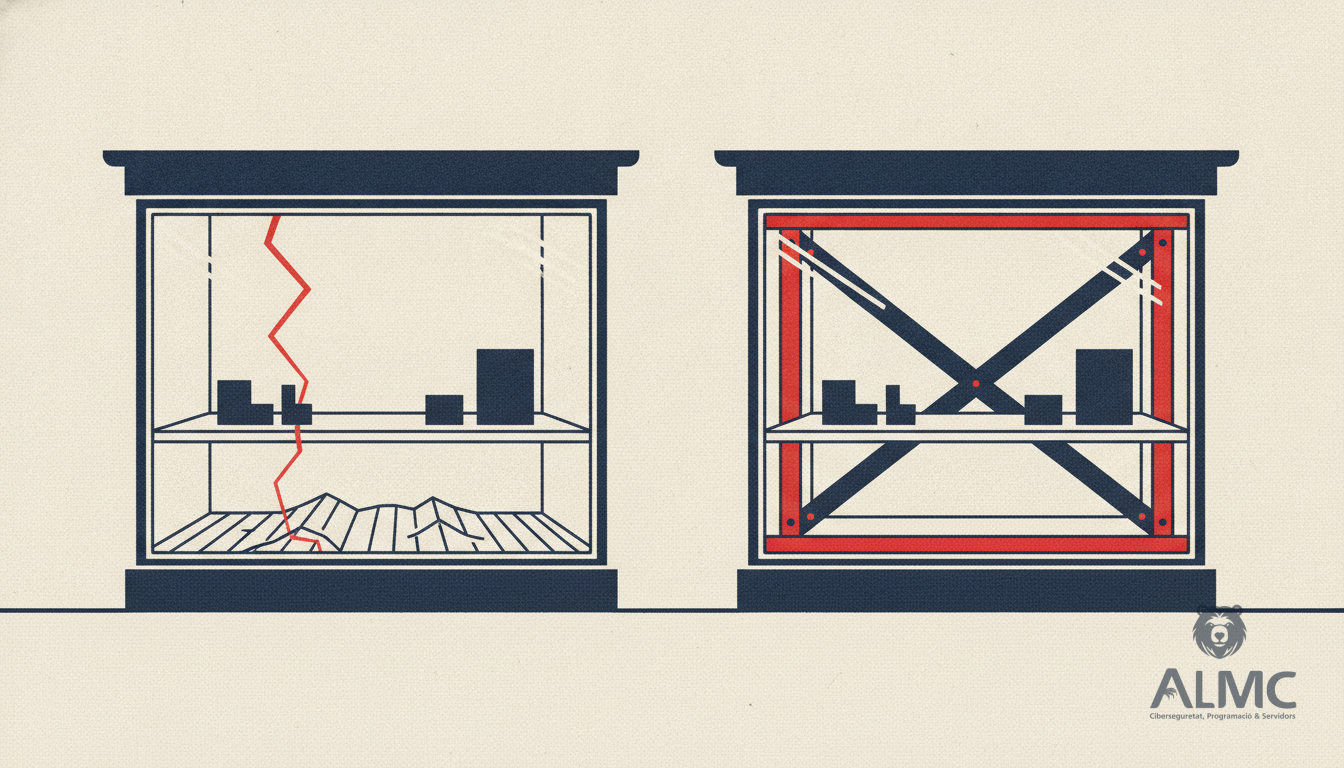
The real gap between an entry-level build and a professional web development project lives in the layers you cannot see from the outside. Those layers decide whether the site brings in customers for the next five years or quietly becomes an expensive business card.
Where the money actually goes
Design templates are cheap and genuinely good nowadays, which is why visual polish is the worst possible yardstick for comparing budgets. The difference shows up in the decisions taken before a single page is published:
- Technical SEO and site architecture. A low-cost build usually installs the CMS, publishes the pages and stops there. A professional project decides which URLs get indexed, how categories and service pages are structured, how internal linking works and how the site behaves on a mobile connection. A large share of websites worldwide receive no organic traffic at all, and the usual culprit is exactly this missing layer. Getting it right from day one can shorten the wait for meaningful search visibility by many months.
- Content that sells. Copying supplier descriptions or recycling text from another site creates duplicate content and gives search engines no reason to prefer you. Well-written product and service pages answer real buying questions, which helps both rankings and conversion rates.
- Legal compliance. A generic privacy policy downloaded from a template is not a legal strategy. Spanish data protection authorities have been issuing substantial fines in recent years, and the GDPR applies to any site that collects a name, an email or a cookie. Texts must match the activity you actually carry out and the data you actually process.
- Speed and hosting. A shared server costing a few euros a month, with no caching and no CDN, adds seconds to every page load on a normal mobile connection. Those seconds translate directly into abandoned visits. Performance is a sales metric, not a technical vanity figure.
- Maintenance and security. A site that takes payments or stores personal data needs updates, monitoring and someone to fix problems quickly. A modest maintenance plan for a small business in Spain typically costs somewhere between €50 and €150 per month, which is far less than the damage caused by an unresolved vulnerability or a week of downtime.
The cheapest option is not always the wrong one
There is a legitimate case for a lean, low-budget site: validating an idea, testing a niche, launching a temporary campaign page. In those scenarios, spending little is rational. The mistake is buying that same lean build when the website is meant to be the main channel for attracting clients. In that case the cheap site becomes a first payment, not a saving, because a migration to a professional platform usually follows within a year or two, with the extra cost of moving content, redirects and lost rankings.
It helps to think in terms of total cost of ownership rather than invoice price. A professional build spreads its value across search visibility, faster pages, fewer legal risks and a site that keeps working while you sleep.
Custom development or WordPress?
Both routes are valid, and the right answer depends on the project. WordPress is a sensible choice for most SMEs and professional practices in Catalonia: it is mature, well supported, easy to extend and, when properly configured, fast and secure. Custom development makes more sense when the business logic is unusual, when there are integrations with ERP or invoicing systems, or when performance and data control are critical. What matters is that the chosen path is optimised for rendimiento web, security and search from the start, not patched afterwards.
A practical checklist before you sign
When comparing proposals, ask specific questions rather than staring at the final number:
- Who decides what gets indexed, and how is the URL structure planned?
- Are product and service pages written from scratch or copied from suppliers?
- Are legal texts adapted to my activity and the data I collect?
- What hosting, caching and CDN setup is included, and what load times are expected on mobile?
- What happens after launch: updates, backups, monitoring, response times?
- Can I take the site with me if I change provider, or am I locked in?
A professional web development partner in Lleida, Tarragona, Girona or Barcelona should be able to answer all of these without hesitation. If the answers are vague, the price is probably hiding something.
The bottom line
Comparing two quotes by their final figure alone is comparing blind. Two websites can cost the same and have nothing in common, and two websites can look identical on delivery day while one is built to attract clients and the other merely exists. For SMEs and independent professionals across Spain, the sensible question is not "how much does a website cost?" but "what will this website be doing for my business in three years?"
Related
- Professional Web Design for Businesses: Complete 2026 Guide
- Google AI Overviews in 2026: 5 Key Takeaways for Your Business
- Digitalisation Grants in Extremadura 2026: Up to €20,000 for SMEs
- Apps móviles
Put these ideas into practice
Talk to ALMC about a solution for your business. Explore your options or contact our team.