
Mobile apps for business: from idea to app store
Mobile apps for business: from idea to app store
Why a mobile app still earns its place in 2026Most businesses in Lleida, Barcelona and across Catalonia already have a website that works reasonably w...
Why a mobile app still earns its place in 2026
Most businesses in Lleida, Barcelona and across Catalonia already have a website that works reasonably well on a phone. So the question is fair: why invest in a native app? The answer rarely lies in fashion. It lies in frequency, context and data. A well-built app removes friction from repeated tasks — ordering, booking, checking a delivery, clocking in, reporting an incident — and it does so with notifications, offline capability and access to the device hardware that a browser cannot match.
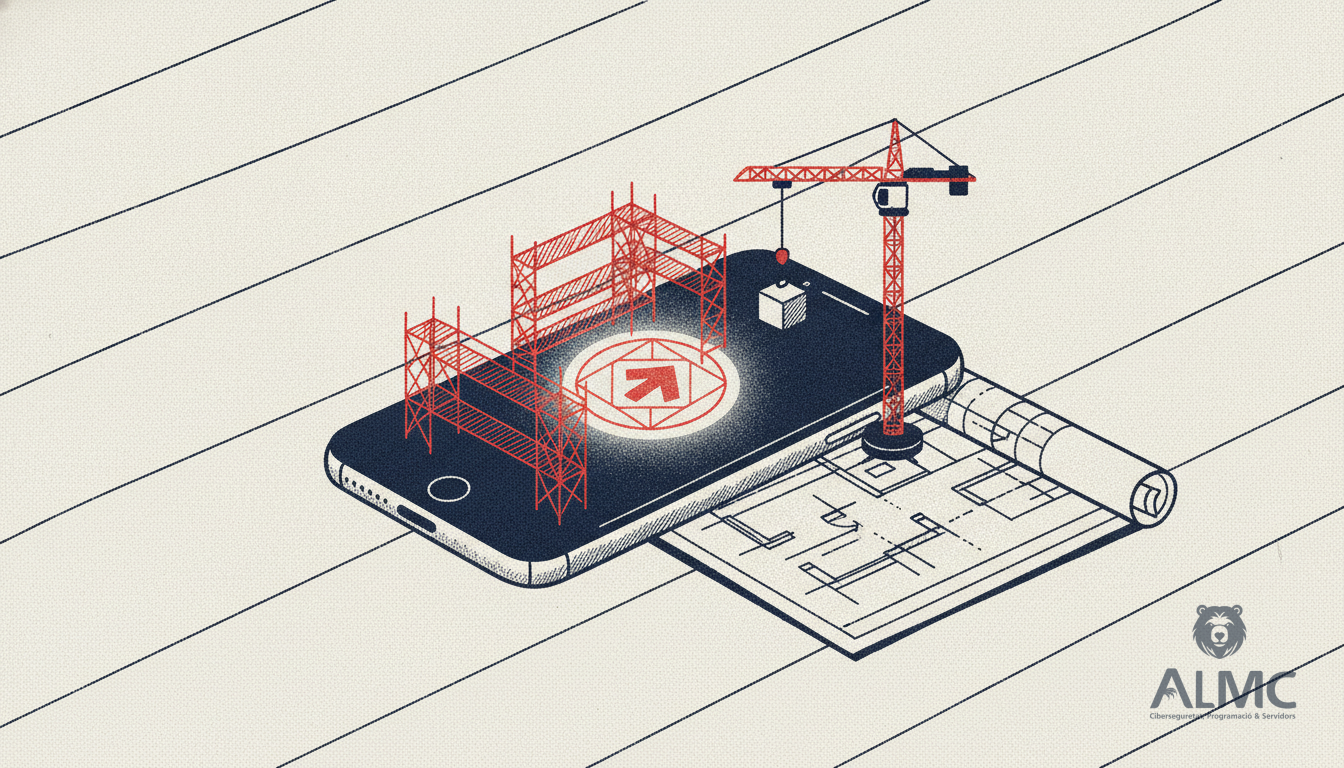
For companies with loyal or recurring customers, that difference is measurable. For one-off transactions, a responsive website is usually enough. Knowing which of the two you are is the first decision of any project, and it should come before a single line of code is written.
Native, cross-platform or progressive web app?
There is no universal winner, only trade-offs. In practice, most projects we scope fall into one of three buckets:
- Native iOS and Android: the best performance and the deepest integration with the operating system. Sensible when the app is the product, or when camera, Bluetooth, geolocation or background processing are central.
- Cross-platform frameworks: a single codebase compiled for both stores. It shortens time to market and reduces maintenance cost, at the price of occasional platform-specific workarounds.
- Progressive web apps: installable from the browser, no store review, cheaper to maintain. A good fit for internal tools or content-heavy services, less so when you need push notifications at scale or heavy device access.
The right choice depends on budget, roadmap and the skills of whoever will maintain the codebase. A decision made on hype rather than requirements tends to surface as technical debt two years later.
From idea to the stores: how a project actually runs
A custom app is a product, not a deliverable. The phases that matter are consistent across projects, even if their length varies:
- Discovery and scoping. Define the user, the core job the app performs, and the metrics that will tell you whether it works. A short, honest scope document saves months.
- UX and interface design. Wireframes first, then a visual system. Testing flows with real users early is far cheaper than redesigning after launch.
- Development in iterations. Build the smallest useful version, review it, then extend. Stakeholders should see working software regularly, not slide decks.
- Quality assurance. Device testing across screen sizes and OS versions, plus load and security checks before anything reaches a store.
- Publication and review. Apple and Google both review submissions against their guidelines. Rejections are common and usually fixable, but they add days, so plan for them.
- Maintenance. Operating systems update every year. An app without a maintenance budget quietly stops working.
Our own approach at ALMC.es follows that arc: we start from the business idea, design and build the app, and accompany the client through store publication and the updates that follow. The goal is a product that fits the pocket of your customers, not a demo that impresses in a meeting room.
GDPR and the Spanish context
Any app handling personal data in Spain must comply with the GDPR and the LOPDGDD. In practice this means a lawful basis for processing, a clear privacy policy inside the app, data minimisation, and a documented approach to retention and deletion. If you use analytics or crash-reporting SDKs, those are third-party processors and belong in your records. Consent for marketing notifications must be explicit and revocable, and push permissions should be requested when the user understands the benefit — not on first launch.
It is also worth thinking about accessibility from the start. Font scaling, contrast and screen-reader labels are cheaper to build in than to retrofit, and public-sector or publicly funded projects increasingly require them.
What it costs, realistically
Budgets in the Catalan market vary widely, but a focused first version of a business app typically sits in a five-figure range in euros, with complexity driving the number: user accounts, payments, integrations with an ERP or CRM, offline mode, multi-language support. Ongoing costs include store fees, backend hosting, and an annual maintenance allowance of roughly 15–20% of the initial build. Treat that as part of the plan, not an unpleasant surprise.
Signs your business is ready
You are probably ready for a custom app if customers repeat the same interaction often, if your team works in the field and needs to capture data on the move, or if your service would benefit from timely notifications. You are probably not ready if the core problem is simply that your website is slow — fix that first, at a fraction of the cost.
An app is a long-term commitment, but a well-scoped one compounds: it owns a place on the home screen, it learns from usage, and it turns a transactional relationship into a habitual one. Starting with a clear problem and a modest first release is still the most reliable route from idea to store.
Related
- 10 Mobile App Ideas to Transform Your Business in 2025
- The Mobile App Boom: Why Your Business Needs a Custom App in 2025
- Monetising Mobile Apps: Key Business Models for 2025
- Chatbot IA
Put these ideas into practice
Talk to ALMC about a solution for your business. Explore your options or contact our team.